Crockpot Pot Roast (Melt in Your Mouth Beef with Pan Gravy)
A plain chuck roast becomes tender, shreddable beef in the slow cooker, surrounded by soft potatoes and carrots and finished with a quick gravy made right from the pot.
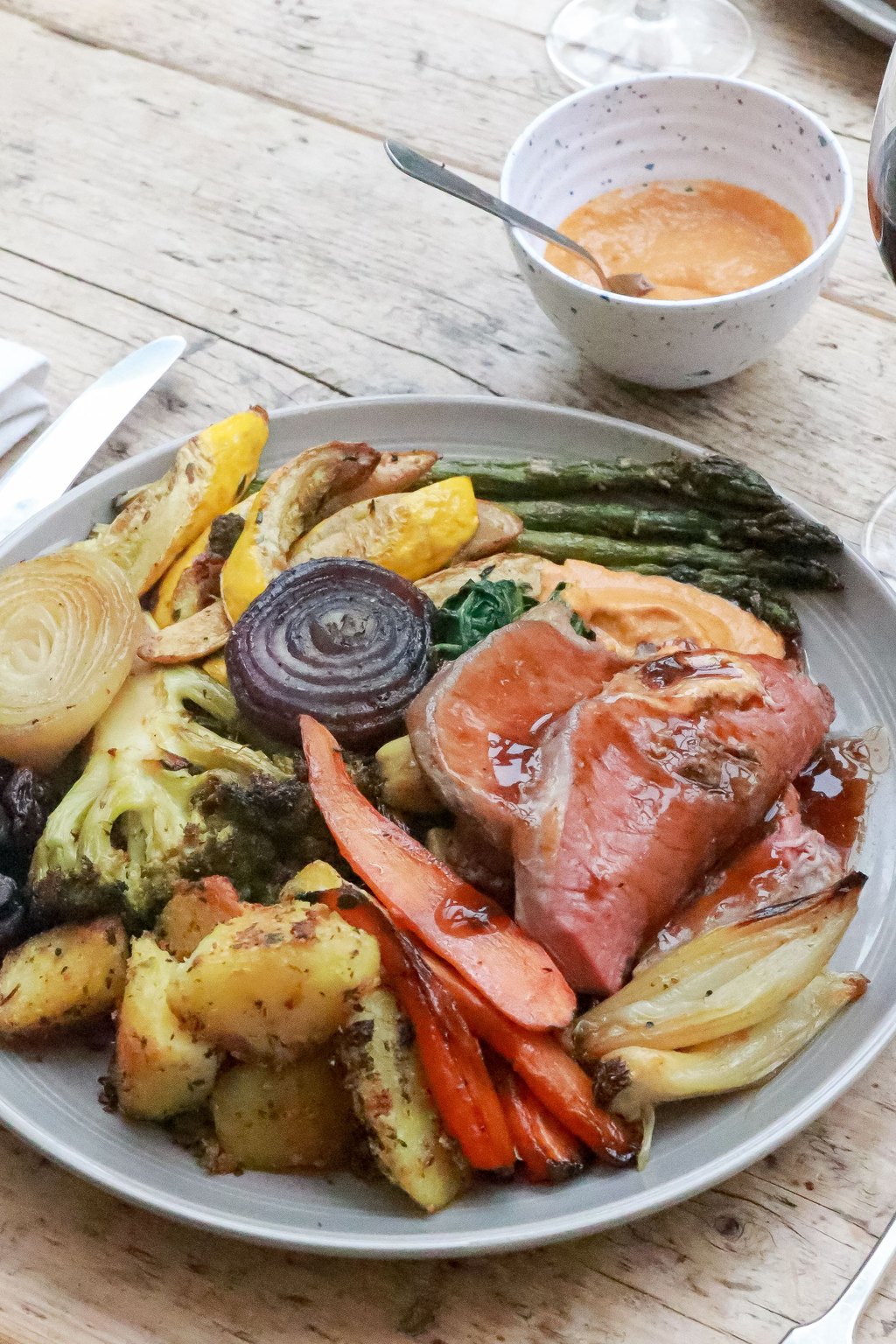
Why make this
- Beef, potatoes and carrots all cook together in a single pot while you go about your day
- Choose 8 hours on LOW or roughly 5 hours on HIGH
- The juices left in the cooker turn into a smooth, shiny gravy in a few minutes
When our kids were small, pot roast meant a busy Sunday with three little ones underfoot and me checking a heavy pot in the oven every half hour. Now that the house is quieter, I still make it nearly every other weekend in the colder months, but I let the slow cooker do the watching. Tom calls it our lazy Sunday roast, and he means it as the highest compliment.
Here is how it goes. A chuck roast with good marbling gets browned in a hot skillet, then it rests in the cooker over a layer of potatoes, carrots and celery. Broth, garlic, tomato paste and a few sprigs of herbs go in around it. After a long, slow day on LOW, or about 5 hours on HIGH, the meat gives way at the touch of a fork, the vegetables are tender and rich with beefy flavor, and the liquid becomes gravy in the time it takes to set the table.
It is the kind of meal that makes a small kitchen smell like a big family dinner. I can chop everything while the coffee drips, go work in the garden or run errands, and come back to a supper that tastes like it took all day. Technically it did, but not my day.
Why this recipe works
- The right cut makes the meal. Chuck carries lots of fat and connective tissue, and long, low heat slowly turns that into the soft, juicy texture everyone loves.
- Browning pays off. About 10 minutes in a hot pan gives the roast a dark, savory crust and leaves flavorful bits behind that you scrape up and add to the pot.
- Vegetables sit underneath. Potatoes and carrots rest in the liquid at the bottom, so they cook through evenly and drink up all the meaty juices.
- A modest pour of broth. The beef and vegetables give off a surprising amount of liquid on their own, so a small amount of broth keeps the flavor concentrated.
- Gravy without the fuss. A spoonful of cornstarch thickens the cooking juices at the end, so you get a glossy sauce without juggling extra pans.
Ingredients you’ll need
Nothing on this list is hard to track down, and you likely have half of it on hand already. You will find measurements in the recipe card further down.
- A boneless chuck roast, 3 to 4 pounds
- Kosher salt and black pepper
- Olive or vegetable oil for browning
- A yellow onion and garlic
- Tomato paste
- Low sodium beef broth
- Worcestershire sauce
- Thyme, rosemary and a couple of bay leaves
- Little gold potatoes, carrots and celery
- Cornstarch and cold water to thicken the gravy
- Chopped parsley to finish
Ingredient notes and smart substitutions
Chuck roast
At the meat counter, look for something labeled chuck roast, chuck shoulder or chuck eye, with plenty of creamy white fat woven through the red. Do not trim it away, because that fat is what makes the meat so tender. Lean roasts such as eye of round or sirloin tip usually come out dry and stringy after a long cook. Bottom round can work if it is all you have, though you will want to slice it rather than pull it apart, and it will not be quite as soft.
Beef broth
I always buy the low sodium kind. The juices cook down a little over the day, and gravy made from salty broth can quickly become too much. If regular broth is what is in the cupboard, use only half the kosher salt. Swapping 1/2 cup of the broth for a dry red wine gives the gravy a deeper, almost velvety taste.
Potatoes
Small gold potatoes keep their shape and get buttery in the middle. Any that are golf ball size I leave whole, and larger ones get cut in half. Russets can stand in, but cut them into big 2 inch pieces, since they are softer and may fall apart over many hours.
Carrots and celery
Big, chunky carrot pieces stand up to the long cook. Thin coins or baby carrots tend to go mushy by evening, so if that is what you have, drop them in for just the final 3 hours. Celery adds a quiet savory backbone, but feel free to leave it out or use a couple of parsnips for a little sweetness.
Herbs
I cut fresh thyme and rosemary from my garden for this, and the bare stems are easy to fish out at the end. Dried herbs work fine too. Use 1 teaspoon of dried thyme and 1/2 teaspoon of dried rosemary, and rub them between your palms before adding to release their oils.
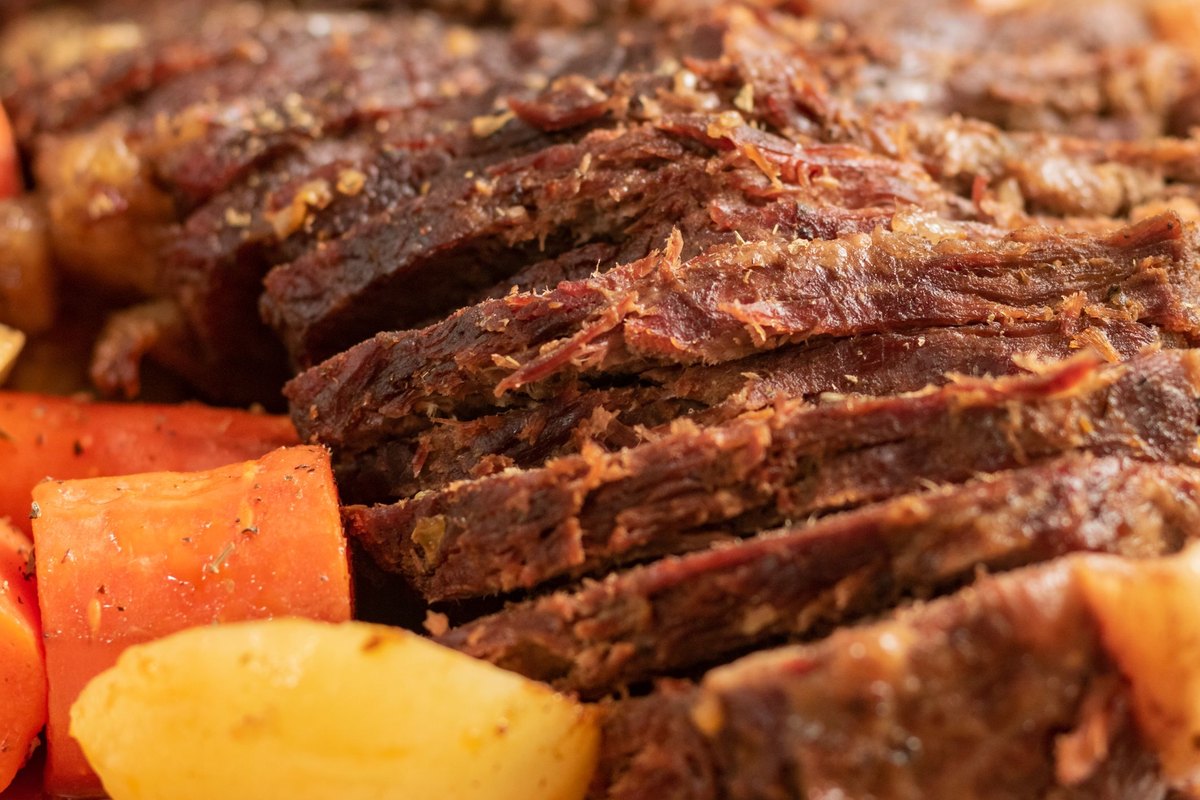
How to make it
Step 1. Season the roast
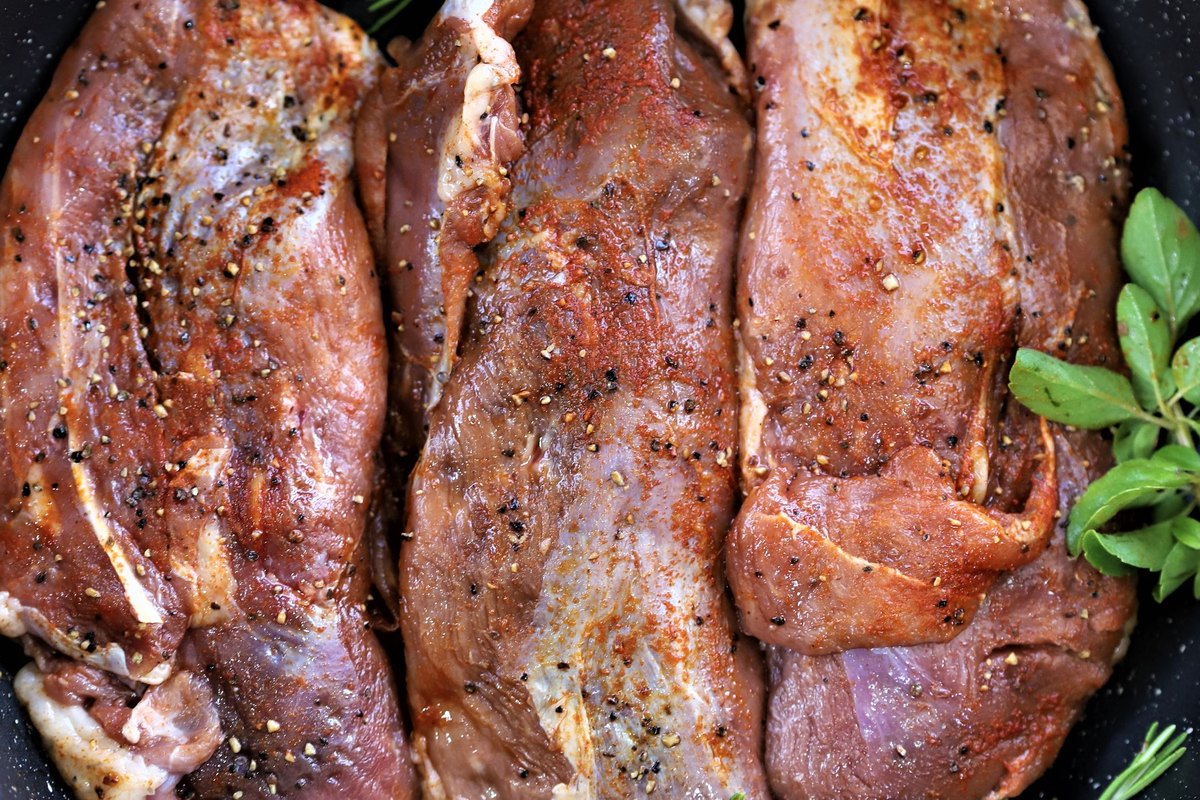
Blot the roast all over with paper towels until the surface feels dry. Moisture is the enemy of a good brown crust. Sprinkle the salt and pepper over every side and rub it in with your hands. If you can spare 20 minutes, leave the seasoned roast on the counter while you prep the vegetables.
Step 2. Sear it well
Set a large skillet over medium high heat, add the oil and wait until it ripples. Set the roast in the pan and do not move it for 4 to 5 minutes, until the bottom is a rich, dark brown. Flip it to brown the second side, then hold it with tongs and roll the edges against the pan for a few seconds each. Transfer it to a plate. The inside will still be raw, and that is exactly right.
Step 3. Layer the vegetables
While the meat is searing, spread the potatoes, carrots and celery across the bottom of a slow cooker that holds at least 6 quarts, and slip the bay leaves in among them. This layer works like a little platform so the roast sits just above the liquid and braises slowly rather than boiling.
Step 4. Build the cooking liquid
Turn the skillet down to medium and add the sliced onion. Give it 3 to 4 minutes, stirring and scraping at the dark bits stuck to the pan, until it begins to go limp. Add the garlic and tomato paste and stir for 1 minute, until the paste turns a shade darker. Pour in the broth and Worcestershire and scrape the pan until nothing is left stuck to the bottom. Every one of those browned bits is flavor for the gravy.
This is also a good moment to give the counter a quick wipe and start the dishwater. By the time the roast is in the pot, the kitchen is nearly clean, which is my favorite part of slow cooker cooking.
Step 5. Let the slow cooker take over
Place the roast on the vegetables, pour the onion mixture over it and lay the herb sprigs across the top. Put the lid on and cook 8 to 10 hours on LOW, or 5 to 6 hours on HIGH. LOW gives the juiciest, most tender meat, so that is my choice on any day I am home. You will know it is done when a fork slides in and the beef pulls apart with no effort. If it still resists, let it go 30 to 60 minutes more.
Step 6. Make the gravy
Lift the meat and vegetables out gently and set them on a platter under a loose sheet of foil. Pull out the herb stems and bay leaves and throw them away. Skim off the fat floating on the liquid, then ladle roughly 2 cups into a small saucepan and bring it to a simmer. Mix the cornstarch with the cold water until there are no lumps, whisk it into the pan and let it bubble 2 to 3 minutes, until it turns thick and shiny. Season with salt and pepper to your taste.
Step 7. Shred and serve
Use two forks to pull the roast into big, rustic pieces. Arrange the beef and vegetables on a serving platter, drizzle some of the gravy over it all and scatter the parsley on top. Put the remaining gravy in a small pitcher for the table.
Common mistakes to avoid
- Not browning the meat. A raw roast will cook just fine in the slow cooker, but it tastes bland and looks gray. Ten minutes at the stove makes a world of difference.
- Drowning the roast. The beef should sit partly above the liquid. Around 1 1/2 cups of broth is enough, because everything in the pot adds its own juices.
- Peeking too often. Each time the lid comes off, heat escapes, and you may add 20 minutes or longer to dinner. Keep it closed until you are near the end.
- Giving up early. A chewy pot roast nearly always needs more time, not less. The connective tissue has to fully soften, so keep cooking until it pulls apart easily.
- A cooker that is too small. With a 3 to 4 pound roast and all the vegetables, you need 6 quarts or more. A packed insert cooks unevenly.
Make ahead and storage
Make ahead. The night before, chop the vegetables and brown the roast. Store the browned meat in one container and the cooled onion and broth in another in the refrigerator, and store the cut potatoes in a bowl of water so they stay white. In the morning, drain the potatoes, load the cooker and plan on an extra 30 minutes since everything starts out cold.
Fridge. Pack leftover beef and vegetables with a bit of gravy in sealed containers and refrigerate up to 4 days. That gravy keeps everything moist.
Freezer. The shredded beef freezes well in its gravy for up to 3 months. I skip freezing the potatoes since they turn mealy, and I boil a fresh batch when we eat the leftovers.
Reheating. Gently warm leftovers in a covered pot over medium low heat with a little broth, stirring now and then, or heat in the microwave a minute at a time. Frozen portions should thaw in the refrigerator overnight first.
Variations
- Red wine and mushroom. Use 1/2 cup of dry red wine in place of some of the broth and toss a handful of sliced mushrooms in with the vegetables.
- French onion style. Stir 1 teaspoon of onion powder plus 1 tablespoon of dried minced onion into the broth for that familiar savory taste, no seasoning packet required.
- Balsamic roast. A splash of 2 tablespoons of balsamic vinegar in the broth makes the gravy a little sweet and a little tangy.
- Autumn roots. Trade some potatoes for parsnips, turnips or sweet potato chunks when the weather turns cool.
- Leftover sandwiches. Heap the shredded beef onto toasted rolls, top with melted provolone and serve with a mug of hot gravy for dunking. Tom claims these are the real reason I make pot roast.
What to serve with it
With potatoes and carrots cooking right alongside the beef, you really have a full dinner in one pot. Even so, someone at my table always asks for bread to mop up the gravy, so I warm a basket of soft rolls or slice a crusty loaf. A crisp salad with a punchy vinaigrette or a sheet pan of roasted green beans brings some brightness to the plate. When the whole family is home and appetites are big, I add a pot of buttered egg noodles or a bowl of mashed potatoes to stretch the meal. Finish with a warm apple crisp or a slice of pumpkin bread and you have about the coziest Sunday dinner there is.
Crockpot Pot Roast
Chuck roast browned in a skillet and then cooked low and slow alongside potatoes, carrots, garlic and herbs until it falls apart, served with a gravy made from the juices in the pot.
Ingredients
For the pot roast
- 1 boneless chuck roast, 3 to 4 pounds
- 2 teaspoons kosher salt
- 1 teaspoon black pepper
- 2 tablespoons olive oil
- 1 1/2 pounds small gold potatoes, larger ones halved
- 4 large carrots, in 2 inch pieces
- 2 celery stalks, in 2 inch pieces
- 1 large yellow onion, sliced
- 4 garlic cloves, minced
- 2 tablespoons tomato paste
- 1 1/2 cups low sodium beef broth
- 1 tablespoon Worcestershire sauce
- 4 fresh thyme sprigs and 2 fresh rosemary sprigs
- 2 bay leaves
For the gravy
- 2 tablespoons cornstarch
- 3 tablespoons cold water
- 2 tablespoons fresh parsley, chopped, to serve
Instructions
- Dry the roast well with paper towels, then rub the salt and pepper over every side.
- Warm the oil in a big skillet over medium high heat. Brown the roast 4 to 5 minutes on each side until dark and crusty, briefly sear the edges, then move it to a plate.
- Spread the potatoes, carrots and celery over the bottom of a slow cooker of at least 6 quarts and tuck in the bay leaves.
- Lower the heat under the skillet to medium. Soften the onion for 3 to 4 minutes, cook the garlic and tomato paste with it for 1 minute, then add the broth and Worcestershire and scrape the pan clean.
- Rest the roast over the vegetables, pour the onion and broth over it and lay the herb sprigs on the meat.
- Put on the lid and cook 8 to 10 hours on LOW or 5 to 6 hours on HIGH, until a fork pulls the beef apart easily.
- Transfer the beef and vegetables to a platter under loose foil. Throw out the bay leaves and herb stems, then skim the fat off the juices.
- Simmer 2 cups of the juices in a small saucepan. Mix the cornstarch and cold water until smooth, add it to the pan while whisking and cook 2 to 3 minutes until thick. Add salt and pepper as needed.
- Pull the beef into large pieces, pour gravy over the meat and vegetables and finish with the parsley.
Frequently Asked Questions
Which setting gives the best pot roast, LOW or HIGH?
Go with LOW if your day allows it. The longer, gentler cook of 8 to 10 hours lets the tough tissue in a chuck roast soften slowly, and the meat comes out juicier and more tender. HIGH gets dinner done in 5 to 6 hours and is great in a pinch, though the beef may be a touch firmer and drier.
Is browning the roast first really necessary?
It is optional, but I never skip it. That dark crust brings a rich, roasted flavor to the beef and to the gravy, and the bits left in the skillet add even more once you scrape them into the broth. On a rushed morning you can put the roast in raw, and it will still get tender. It just will not taste as deep.
My pot roast came out chewy. What went wrong?
Most likely it simply needed more time. Chuck goes through a tight, tough phase before the connective tissue gives way and the meat turns soft. Replace the lid and give it another 30 to 60 minutes, then test again with a fork. Choosing a lean roast such as eye of round can also leave you with dry, chewy beef.
How much liquid should go in with the roast?
Less than you might think. The broth only needs to reach partway up the roast, since a slow cooker holds in moisture and the meat and vegetables give off lots of juice. Too much liquid waters down the taste and leaves you with boiled beef. For a 3 to 4 pound roast, I use roughly 1 1/2 cups of broth.
Is it safe to cook a roast straight from the freezer?
I would not. A frozen roast warms so slowly that it can linger for hours at temperatures where bacteria thrive. Let it thaw in the fridge for a day or two before cooking. If you forget, cut the partly thawed roast into a few big chunks so it heats more evenly and safely.