Women Should Know These Thoughts Men Keep to Themselves (Because It Matters)
The last week of August was hot, and my husband Tom decided it was the week to repaint the garage. I did not argue. I brought…

The last week of August was hot, and my husband Tom decided it was the week to repaint the garage. I did not argue. I brought a lawn chair out to the driveway, set a glass of iced tea on the cooler, and read reader mail to him while he worked.
A few weeks earlier I had asked the men who read this blog a simple question. What do you think about your wife or girlfriend that you keep to yourself? I expected a dozen replies. I got stacks. I printed them out and sorted them into a folder, and that folder sat on my lap every afternoon that week while Tom rolled paint and grunted at the ladder.
The replies surprised me, and some of them surprised Tom too. He stopped painting more than once to say, “That one is true.” After more than thirty years of marriage, I thought I knew most of what went on in that man’s head. I was wrong about a good bit of it. Here is what the men told me, one at a time, the way I read them to Tom in the driveway.
He notices when you are tired and does not know what to say

The first letter I read out loud in the driveway came from Dale R., 61, from Toledo, Ohio. Dale wrote that he can tell the minute his wife walks in the door whether the day went badly. He said he sees it in how she sets down her purse. Then he said he stands there and says nothing, because every time he asks, she says she is fine. Tom put down the roller and said, “I do that. You say fine and I believe it because it is easier.” I had not known that. I thought Tom did not notice.
The plain lesson is this. A man may see that you are worn out and freeze because he has been told you are fine too many times.
He wants to hear that he did a good job

On the second afternoon Tom was on the ladder scraping old paint off the trim. I read a letter from Marcus T., 47, from Boise, Idaho. Marcus wrote that he fixed the dryer, mowed the lawn, and drove his mother-in-law to the doctor in one weekend. Nobody said a word about it. He wrote that he would not ask for praise because that would feel childish, but that a plain thank you would have carried him for a week. Tom said nothing for a minute. Then he said, “Nobody ever thanks a man for the dryer.” I thanked him for the garage right then and he looked pleased.
The takeaway is simple. A man will not ask for a thank you, but it lands harder than you think.
He worries about money more than he admits

That same week Tom came in from the driveway with paint on his arms and said the lumber for the trim cost more than he expected. He said it in a light voice and then went to wash up. I read a letter the next day from Ray P., 54, from Little Rock, Arkansas. Ray wrote that he lies awake doing the math on retirement and never tells his wife because he does not want her to worry too. He said carrying it alone feels like his job. I asked Tom if that sounded familiar. Tom shrugged and said, “A man does not want to be the one who says we might be short.”
Here is the lesson. If money comes up in a light voice, there is probably a heavier version underneath.
He misses the early years too

One evening Tom and I sat on the tailgate of the truck after the first coat dried. I read him a letter from Gene W., 68, from Spokane, Washington. Gene wrote that he thinks about the apartment where he and his wife first lived, with the bad radiator and the one skillet. He wrote that he misses those years and has never said so because he figures his wife thinks he does not care about that kind of thing. Tom was quiet. Then he brought up the rental house we had before the kids, and the mice, and how cold it was. I had not heard Tom mention that house in years.
The plain takeaway is this. A man can be sentimental about the early days and simply never bring it up.
He is not always trying to fix it, he just does not know the other option

On the third day of garage painting I read a letter from Curtis L., 43, from Grand Rapids, Michigan. Curtis wrote that when his wife tells him about a problem at work, he jumps to solutions because that is the only thing he knows how to offer. He said he has learned she often just wants him to listen, but in the moment he panics and starts fixing anyway. Tom laughed from the ladder. He said, “I would rather fix the dryer than talk about the dryer.” I told Tom that sometimes I need him to just nod. He said he would try, and then he asked if I wanted him to fix the nodding.
The lesson is plain. Tell a man what you want from him before you start the story.
Silence usually means thinking, not anger

Tom gets quiet when he works. That whole week in the driveway he said maybe six words an hour. I read him a letter from Hank D., 66, from Columbus, Ohio. Hank wrote that his wife asks what is wrong every time he goes quiet, and most of the time nothing is wrong. He is just thinking about the car or the weather or nothing at all. He wrote that being asked what is wrong starts to feel like an accusation. Tom nodded without looking down. He said, “Quiet is not mad. Quiet is quiet.” I have spent a lot of years reading things into Tom’s silences that were not there.
The takeaway is this. A quiet man is often only quiet, and asking what is wrong can create a problem that did not exist.
He is afraid of becoming a burden

The letter that stopped Tom cold came on the fourth afternoon. It was from Walt F., 72, from Scranton, Pennsylvania. Walt wrote that his knees are going, and the thing he thinks about most is the day his wife will have to help him out of a chair. He wrote that he would rather be a help than a job, and that he has never told her this because saying it would make it real. Tom climbed down the ladder and sat on the bumper for a while. He said his father had been that way near the end. Tom did not say more, and I did not push.
Here is the plain lesson. A man may be carrying a fear about aging that he has never once put into words.
He wants to be asked about his day

That week I made a point of asking Tom how the painting went every evening, and he told me more than he usually does. I had read a letter from Sam K., 39, from Fort Worth, Texas. Sam wrote that his wife tells him everything about her day, and he loves hearing it, but she rarely asks about his. He said he figures his day sounds boring to her, so he does not volunteer it. But he wishes she would ask. Tom said, “A man figures nobody wants to hear about the meeting.” I told Tom I always want to hear about the meeting. He looked doubtful but pleased.
The takeaway is simple. A man may stop sharing his day because he assumes nobody is interested, not because nothing happened.
He felt second place to the kids for a long time

This one was hard to read out loud. It came from Vince A., 58, from Omaha, Nebraska. Vince wrote that for the years his kids were small, he felt like he came last in his own house. He understood why, and he would not have changed it, but he never said how lonely it was. He wrote that he still does not say it because it sounds selfish. I looked at Tom. Tom kept painting and then said, “Those years were busy for everybody.” That was all he said. I thought about how often dinner was over before I had said a full sentence to Tom.
The lesson is this. A man may have felt crowded out by the kids and kept it quiet because it sounded wrong to complain.
He is lonelier than he lets on

On Thursday a neighbor stopped by the driveway to talk to Tom about the paint color. Tom talked to that man for forty minutes. After the neighbor left, I read a letter from Phil G., 63, from Chattanooga, Tennessee. Phil wrote that his wife has a half dozen friends she talks to every week, and he has one buddy he sees twice a year. He wrote that he would not know how to make a new friend at his age if he tried. Tom said, “Men do not call each other up to chat.” I pointed out that he had just chatted for forty minutes. Tom said that was about paint, which was different.
The plain takeaway is this. A man can be badly lonely for friends and have no idea how to fix it.
He wants you to reach for him first sometimes

I will keep this one short because Tom turned red when I read it. The letter was from Brian S., 45, from Albuquerque, New Mexico. Brian wrote that he is always the one who starts things, whether that is a hug, a kiss, or anything else. He wrote that he sometimes wonders if his wife would ever reach for him if he stopped. He said he does not ask because the question feels needy. Tom looked at the garage wall very hard. Then he said, “That is a fair point.” I reached over and squeezed his hand. He did not let go for a minute.
The lesson is plain. A man who always makes the first move may be waiting to see if you ever will.
He remembers harsh words longer than you think

On Friday morning I read a letter from Owen B., 52, from Des Moines, Iowa. Owen wrote that his wife once told him, during a fight years back, that he was just like his father. He wrote that she probably forgot it the next day. He has not forgotten it. He said he never brought it up because dragging up an old fight seems petty. Tom was scraping trim and he stopped. I asked if there was something I had said that stuck. Tom said there was one thing, from a long time ago, and he did not want to repeat it. I apologized anyway. He said it was fine, and I think he meant it.
Here is the takeaway. A man may carry one sentence from one bad night for years and never mention it.
He is proud of you and does not say it often enough

That afternoon my youngest called about a new job offer, and I stood in the driveway talking for twenty minutes. When I hung up, Tom said, “The kids call you first. That is because of you.” Then he went back to painting. I had read a letter that morning from Len C., 59, from Charleston, South Carolina. Len wrote that his wife went back to school in her fifties and he brags about her to anyone who will listen, but he realized he had never told her directly. He wrote that saying it to her face felt strange. Tom’s comment about the kids was about as direct as he gets.
The plain lesson is this. A man may praise you to everyone but you, because telling you feels harder.
He wants to be trusted with the grandkids

My grandkids were coming that Sunday, and I had already started making a list of what Tom should and should not do with them. Then I read a letter from Doug H., 64, from Tucson, Arizona. Doug wrote that his wife hovers every time he has the grandkids, correcting how he holds the baby or what snack he hands out. He wrote that he raised three kids and they all lived. He said he never says anything because it is not worth a fight. Tom read that one himself over my shoulder. He said, “Huh.” I tore up the list. That Sunday Tom took the grandkids to the hardware store and everybody came back fine.
The takeaway is simple. A man who raised kids may feel insulted when he is supervised with grandkids.
He hates being corrected in front of other people

Saturday afternoon our oldest stopped by to see the garage. Tom told a story about the ladder slipping, and I started to say that was not how it happened. I caught myself. I had read a letter that morning from Carl M., 50, from Louisville, Kentucky. Carl wrote that his wife corrects his stories in front of company, small details like the year or the name of a restaurant. He wrote that it makes him feel like a child and he has stopped telling stories when she is around. He said he never told her why. I let Tom’s ladder story stand. The details were wrong, but the story was his.
The plain lesson is this. Correcting a man in front of others costs more than the small fact is worth.
He wants a plain explanation after a bad night

On Saturday evening I read a letter from Neil J., 38, from Madison, Wisconsin. Neil wrote that after an argument, his wife goes quiet for a day and then acts like nothing happened. He wrote that he never knows what he did or whether it is settled. He would rather hear a plain sentence like, “I was upset because of this, and I am over it now.” He said asking feels like reopening the fight. Tom was cleaning brushes in the sink. He said, “The not knowing is worse than the fight.” I thought about the times I had just moved on without saying anything.
The takeaway is this. A man may need the fight closed out loud, not just dropped.
He thinks about getting old and does not say so

That same evening Tom rubbed his shoulder and said the ladder had been harder on him than it used to be. He said it like a joke. I read him a letter from Art E., 70, from Rochester, New York. Art wrote that every ache makes him think about how many years he has left, and he never says it because his wife would worry. He wrote that he jokes about it instead. Tom stopped rubbing his shoulder. He said, “Well, that is a cheerful letter.” Then he said the shoulder really did hurt. I made him put ice on it, and he let me.
The plain lesson is this. A joke about getting old is often a man’s only way of bringing it up.
He feels it when you pull away

On the drive to pick up groceries for Sunday dinner, I read a letter from Terry N., 56, from Wichita, Kansas. Terry wrote that he can feel when his wife is pulling back, even a little. She stops sitting next to him on the couch or stops touching his arm when she passes. He wrote that he notices immediately and says nothing, because asking would sound insecure. Tom was driving. He said, “You stopped sitting on my side of the couch for about a year once.” I had no idea he had noticed. I had no idea I had done it. I sat on his side that night.
The takeaway is simple. A man may track small signs of distance closely and keep every one of them to himself.
He wants something that is his alone

The garage was Tom’s project from start to finish. He picked the color, bought the paint, and did not ask my opinion once. I understood that better after a letter from Ron V., 49, from Bakersfield, California. Ron wrote that his wife manages the house, the calendar, the kids, and the money, and he is grateful. But he wrote that he has nothing in his life that is just his, and he does not say so because it sounds ungrateful. He said he took up woodworking in the garage mostly to have a corner nobody else ran. Tom said, “The garage is the garage.” I have not touched a paint chip since.
The plain lesson is this. A man may need one thing that is fully his, and he may not know how to ask for it.
He likes being needed
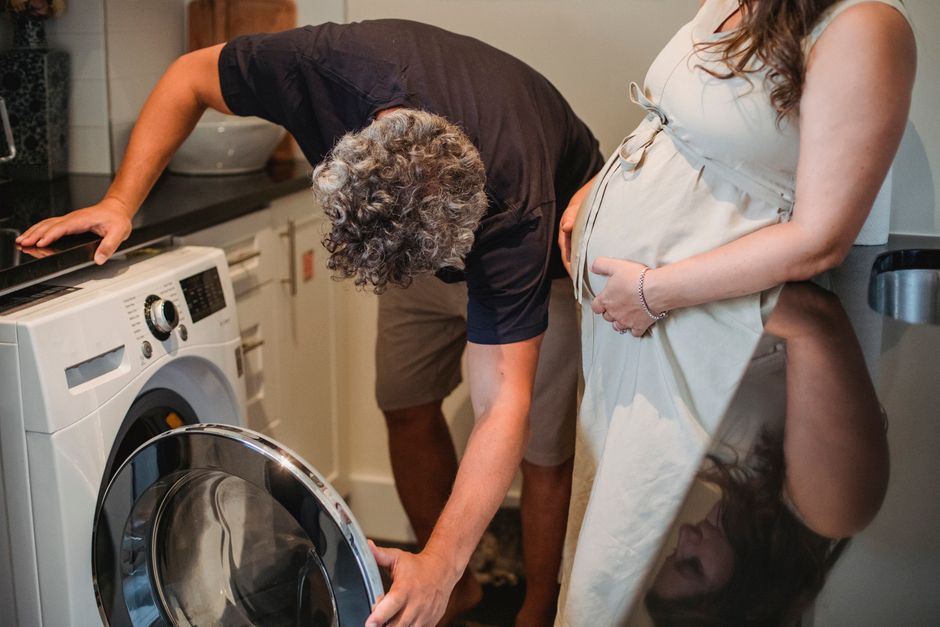
Sunday morning I asked Tom to carry the big roasting pan down from the top shelf. I could have gotten the step stool. I asked him anyway. I had read a letter the night before from Keith O., 41, from Birmingham, Alabama. Keith wrote that his wife is capable and does everything herself, and he admires that. But he wrote that he sometimes feels like he could disappear and the house would run exactly the same. He said being asked to do something small makes him feel like part of the place. Tom got the pan down and set it on the counter and seemed glad to have been asked.
The takeaway is this. A man may want to be needed for small things, even when you could do them yourself.
He will not ask for help with feelings but will take it if offered

While the roast cooked, I read a letter from Jim Y., 62, from Portland, Maine. Jim wrote that when his brother died, his wife asked him every day if he wanted to talk. He said no every time. He wrote that what finally helped was the night she sat down next to him and just started talking about his brother without asking permission. He listened, and then he talked, and that was the first time he had. Tom was setting the table. He said, “Asking a man if he wants to talk gets a no. Just talk.” I filed that away for the next hard thing.
The plain lesson is this. A man may refuse an offer to talk and still need the conversation to happen.
He is still attracted to you

I will say this plainly because the man who wrote it said it plainly. Frank Z., 55, from Reno, Nevada, wrote that his wife thinks he does not see her anymore because of her weight and her age. He wrote that he sees her exactly the way he always did, and that it would not occur to him to say so because to him nothing has changed. He wrote that he wishes she would stop apologizing for her body. I read that to Tom at the kitchen counter. Tom said, “Well, yes.” Then he went to check on the roast. That is about the most Tom has ever said on the subject, and it was enough.
The takeaway is simple. A man may not say he still finds you attractive because to him it never stopped being true.
He misses someone and does not talk about it

Right before the kids arrived on Sunday, I read a letter from Pete I., 67, from Duluth, Minnesota. Pete wrote that his father has been gone for a long time and he still thinks about him most days. He wrote that he has never told his wife how much because grief in a man his age seems like something you are supposed to be done with. He said he talks to his father in the truck sometimes. Tom was quiet. His own father has been gone a long while too. I asked if he still thought about him. Tom said, “Every time I pick up a hammer.” I had not known that.
The plain lesson is this. A man may carry grief for years and keep it entirely private.
He dreads retirement more than he admits

My oldest asked Tom at dinner when he planned to retire. Tom made a joke and changed the subject. I had read a letter that week from Stan Q., 60, from Lincoln, Nebraska. Stan wrote that everyone talks about retirement like a reward, but he thinks about what he will do all day and who he will be without the job. He wrote that his wife is excited for it, so he pretends to be excited too. After dinner I asked Tom about the joke. He said he was not sure what he would do with himself. I told him the garage was done, so he had better find something. He laughed, but he also seemed relieved to have said it.
The takeaway is this. A man may be afraid of retirement and hide it because everyone expects him to be glad.
He wants to grow old with you and cannot say it without feeling foolish

The last letter in the folder I saved for after the kids and grandkids had gone home. It came from Albert U., 69, from Savannah, Georgia. Albert wrote that he has been married most of his life and he has never once said the words, “I want to grow old with you,” because they sound like a greeting card. He wrote that he shows it instead, by warming up the car and taking the burnt toast. He said he hopes his wife reads it in those things. I read that to Tom in the quiet kitchen. Tom looked at the fresh paint on the garage through the window. He said, “That is the whole point of the garage.” I knew what he meant.
The plain lesson is this. A man may be telling you he plans to stay through small chores, because the words feel too big to say.
The garage looks good. Tom says it needs a second coat on the north side, but he has been saying that for a while and I think he just wants a reason to be out there. The folder of letters is in the kitchen drawer now, and I have gone back to it more than once.
What struck me most, reading all of those letters out loud in the driveway, was how often Tom said, “That one is true.” I would have told you I knew my husband inside and out. I knew the pot roast end piece and the Saturday leaves. I did not know about the couch, or the hammer, or the old sentence he still carries. None of those men wrote anything dramatic. They wrote about small things they never said because saying them felt needy, or petty, or foolish. The not saying was the problem, not the thing itself.
If you are married or dating, I would not hand your man this list and demand answers. I would just start asking about his day, let his stories stand, and sit on his side of the couch. He may surprise you. Which of these do you think the man in your life has been keeping to himself?
Keep Reading